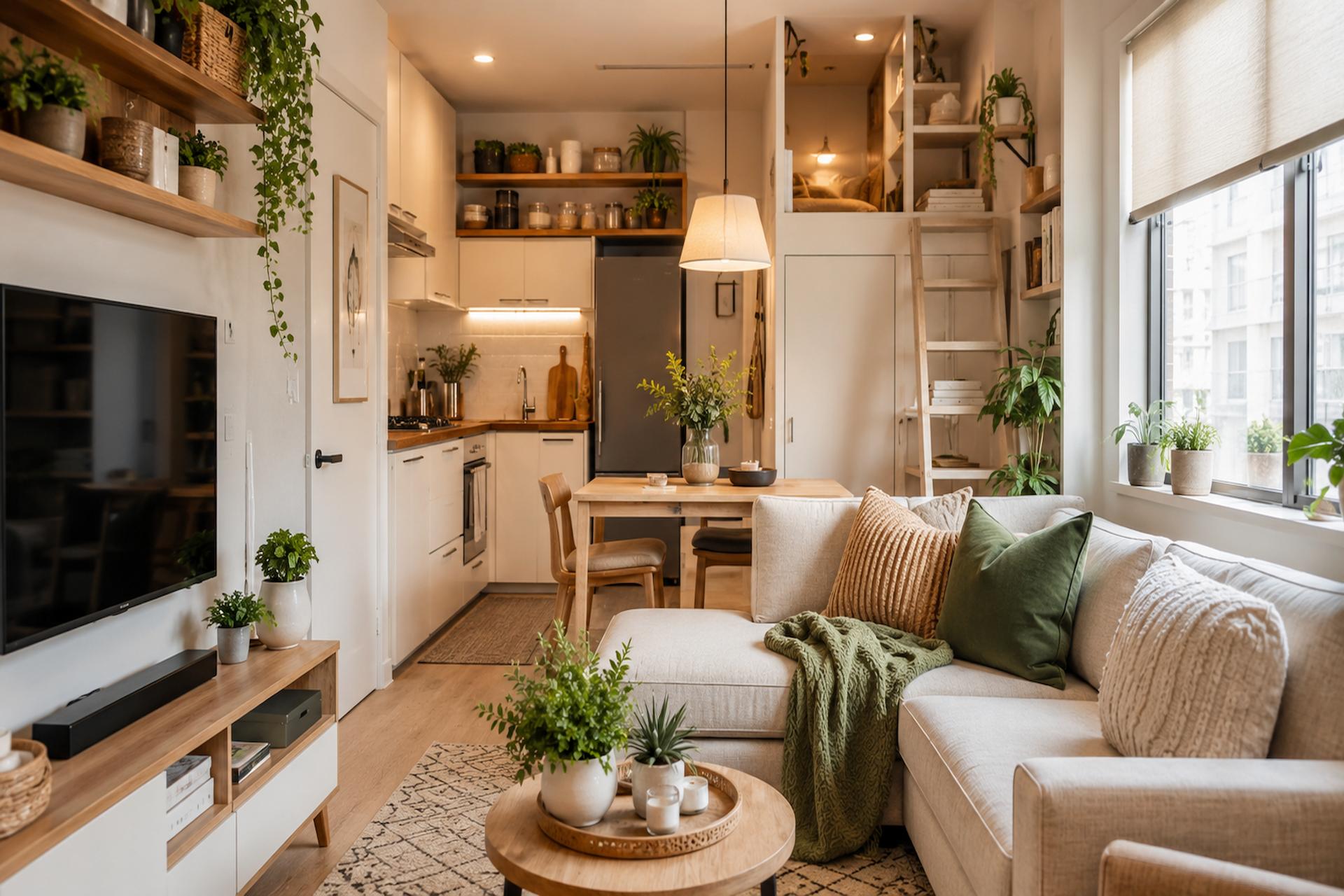
Compact homes are becoming increasingly common, but a smaller footprint does not mean sacrificing comfort, beauty, or functionality. With thoughtful planning and smart interior design choices, even the smallest apartment, studio, or townhouse can feel open, organised, and welcoming. Good design is not about filling every corner. It is about making every square foot work harder while creating a home that supports your daily life.
Whether you are living in a city apartment, downsizing after retirement, furnishing a first home, or simply trying to make better use of limited space, timeless design principles can help transform how your home looks and feels. Smart storage, multifunctional furniture, natural light, balanced colour schemes, and intentional organisation all play important roles in creating interiors that feel much larger than their actual size.
This guide explores practical, long-lasting strategies that improve both the appearance and function of compact homes. Rather than relying on passing design trends, these ideas focus on proven solutions that continue to work regardless of changing styles. Along the way, you will also discover how an organised, well-designed home can reduce stress, improve daily routines, and create a more enjoyable place to live.
Why Small Spaces Deserve Smart Design
Small homes present unique opportunities. Every design decision has a greater impact because each room often serves multiple purposes. Instead of viewing limited square footage as a disadvantage, successful homeowners see it as an invitation to design more intentionally.
A thoughtfully planned compact home offers many advantages:
- Lower maintenance and cleaning requirements
- Reduced utility costs
- More efficient use of furniture and storage
- Less unnecessary clutter
- Easier organisation
- Greater focus on quality over quantity
When every item has a purpose and every area serves a function, daily life becomes simpler and more enjoyable.
Begin with Function Before Decoration
One of the biggest mistakes people make is decorating before solving practical challenges. Beautiful accessories cannot compensate for poor layouts or inadequate storage.
Start by asking practical questions:
- How is each room used every day?
- Which activities happen most often?
- What causes clutter?
- Which items need quick access?
- What could be stored elsewhere?
Once these questions are answered, furniture placement and decoration become much easier.
Good interior design always starts with function. Attractive spaces naturally follow well-planned layouts.
Create a Flexible Floor Plan
Small homes rarely have room for unused furniture or decorative pieces that serve no purpose.
Instead, choose layouts that allow rooms to adapt throughout the day.
For example:
- A dining table can double as a workspace.
- A sofa bed accommodates overnight guests.
- A storage bench provides seating and hidden organisation.
- Folding chairs create extra seating only when needed.
- Nesting tables expand when entertaining and tuck away afterwards.
Flexible layouts make compact homes feel more capable without increasing their size.
Invest in Multifunctional Furniture
Furniture that performs multiple jobs is one of the smartest investments for smaller homes.
Instead of filling rooms with separate pieces, look for furniture designed to maximise efficiency.
Excellent examples include:
Storage Beds
Beds with built-in drawers eliminate the need for additional dressers while keeping seasonal clothing, bedding, or shoes neatly organised.
Lift-Top Coffee Tables
These provide hidden storage while also serving as workstations or dining surfaces.
Extendable Dining Tables
Compact for everyday use but expandable for guests, these tables offer flexibility without consuming permanent space.
Storage Ottomans
Ottomans can function as seating, footrests, coffee tables, and hidden storage all at once.
Wall-Mounted Desks
Ideal for home offices, fold-away desks create productive workspaces without occupying valuable floor space when not in use.
Choosing fewer, higher-quality multifunctional pieces often produces a cleaner and more spacious interior than purchasing many single-purpose items.
Think Vertically Instead of Horizontally
Many homeowners overlook one of their home’s greatest assets: wall space.
When floor space is limited, vertical storage becomes essential.
Consider adding:
- Floor-to-ceiling bookshelves
- Floating shelves
- Wall-mounted cabinets
- Hanging organisers
- Pegboards
- Tall wardrobes
- Vertical plant displays
Using wall height draws the eye upward, making ceilings appear taller while freeing valuable floor area.
Maximise Natural Light
Natural light dramatically changes how large a room feels.
Bright interiors appear cleaner, more welcoming, and significantly more spacious than darker rooms.
Simple ways to increase natural light include:
- Keeping windows unobstructed
- Using sheer curtains instead of heavy drapes
- Choosing light-coloured window treatments
- Cleaning windows regularly
- Positioning mirrors opposite windows
- Selecting reflective finishes where appropriate
If natural light is limited, layered artificial lighting can create a similar sense of openness.
Layer Your Lighting
Relying on one overhead light often creates harsh shadows that make rooms feel smaller.
Instead, combine several light sources.
A balanced lighting plan includes:
Ambient Lighting
General room illumination from ceiling fixtures.
Task Lighting
Focused light for reading, cooking, working, or hobbies.
Accent Lighting
Decorative lighting that highlights artwork, shelves, or architectural details.
Layered lighting creates depth, warmth, and visual interest while improving everyday comfort.
Use Colour to Expand Visual Space
Colour has a powerful influence on how large a room appears.
Lighter colours reflect more light and create an open atmosphere.
Excellent choices include:
- Soft white
- Warm ivory
- Pale grey
- Light beige
- Gentle sage
- Soft blue
This does not mean every room must be completely white. Carefully placed darker colours add contrast and personality without overwhelming the space.
Maintaining a consistent colour palette throughout connected rooms also creates visual continuity, helping the entire home feel larger.
Mirrors: A Simple Way to Double the Sense of Space
Mirrors remain one of the oldest and most effective interior design techniques.
When positioned thoughtfully, they:
- Reflect natural light
- Create visual depth
- Expand sightlines
- Brighten darker corners
- Make narrow rooms appear wider
Large mirrors often work better than several smaller ones because they create a stronger illusion of openness while reducing visual clutter.
Reduce Visual Clutter
Clutter affects more than appearance. It also influences how people feel.
Research consistently shows that organised environments can reduce stress, improve concentration, and create a stronger sense of control over daily life.
Simple habits make a noticeable difference:
- Store items immediately after use.
- Donate unused possessions regularly.
- Avoid overcrowding shelves.
- Keep countertops mostly clear.
- Organise cables and electronics.
- Use matching storage containers where possible.
A tidy room naturally feels larger because the eye can move freely without constant visual interruptions.
Choose Furniture That Fits the Room
Oversized furniture is one of the fastest ways to make a small room feel cramped.
Instead of buying fewer oversized pieces or many tiny ones, focus on balanced proportions.
Look for furniture with:
- Slim legs
- Raised bases
- Clean lines
- Open frames
- Narrow profiles
- Appropriate scale
Furniture that allows you to see underneath creates a greater sense of openness because more visible floor area gives the illusion of extra space.
Conclusion
Creating a stylish and comfortable home is not about having more space—it is about using the space you have with purpose. Thoughtful planning, smart storage, multifunctional furniture, and a simple, organised layout can transform even the smallest home into a place that feels open, welcoming, and practical. Every design choice, from selecting the right colours to making the most of natural light, contributes to a home that supports your lifestyle rather than limiting it.
The best part about designing a compact home is that timeless principles never go out of style. Focusing on functionality, quality, and intentional living helps create interiors that remain beautiful and efficient for years to come. Whether you are furnishing a studio apartment, downsizing to a smaller house, or simply looking to maximise every square foot, these smart interior strategies can help you create a home that feels spacious, organised, and uniquely your own. Great design is not measured by the size of a room, but by how well it enhances the way you live every day.